Amsterdam's Queer Community Paves Its Own Path in Relationships
Amsterdam’s queer community strolls through Vondelpark on a warm spring afternoon, hands intertwined or held aloof in subtle displays of affection. They chatter under the canopy of chestnut trees that whisper tales of centuries past, their laughter mingling with the soft hum of b
relationships
Amsterdam’s queer community strolls through Vondelpark on a warm spring afternoon, hands intertwined or held aloof in subtle displays of affection. They chatter under the canopy of chestnut trees that whisper tales of centuries past, their laughter mingling with the soft hum of b
G
Grace Petersen
Jun 6, 2026 · 5 min read
Share
X / Twitter
Facebook
Instagram
Threads
Reddit
LinkedIn
Copy Link
Email
Amsterdam’s queer community strolls through Vondelpark on a warm spring afternoon, hands intertwined or held aloof in subtle displays of affection. They chatter under the canopy of chestnut trees that whisper tales of centuries past, their laughter mingling with the soft hum of bicycles passing by. It’s a scene both familiar and utterly unique—a mosaic of diverse identities forming an intricate of relationships that defy convention. The Netherlands is often hailed as a beacon of progressive values, but in Amsterdam, the queer community has not just adapted to this tolerance; they’ve carved out their own vibrant path. This spring, at the annual Queer & Straight Alliance (QSA) festival, organizers announced plans for a new wing dedicated solely to alternative relationship structures. The event drew record crowds, with booths offering everything from workshops on polyamory to matchmaking services that cater specifically to non-monogamous individuals. One attendee, Theo van der Meer, spoke passionately about the importance of such spaces: “For so long, we’ve been told there’s only one right way to form a family or a couple. Here, we can embrace our authenticity and build communities that truly reflect us.” Yet, amidst this vibrant movement, there are voices that challenge the notion of progress as linear. At the heart of these discussions lies the question: is embracing alternative relationships enough? Some argue that while these new spaces offer valuable support and community, they might also perpetuate a certain lifestyle without addressing underlying systemic issues. For instance, during a panel discussion at the QSA festival, activist Lisa de Graaf posed this critical question: “Are we just creating bubbles of acceptance within larger structures that still marginalize us?” Lisa’s words echo in the halls of Montage House, a cozy café in De Pijp where members of the queer community gather nightly to discuss these very questions. The aroma of freshly brewed coffee and warm pastries fills the air as patrons share stories over cups brimming with steaming liquid. Here, the conversation into more than just relationship models; it explores economic realities, social pressures, and the nuances of love in a city still grappling with its own history. One evening, Marlene Schouten, a local artist known for her vibrant murals celebrating LGBTQ+ identities, spoke candidly about her experiences. “We can’t ignore the fact that many of us are precarious living situations,” she said, pointing to the high cost of housing in central Amsterdam as just one barrier. Her words resonate with attendees, many of whom share stories of financial struggles and the strain this places on their relationships. In response to these challenges, initiatives like QueerFunds have begun to emerge, offering microgrants to support queer-led projects and community events. This initiative underscores a growing awareness among the community that true change requires addressing not just personal relationships but also broader societal issues. For those seeking to engage further with this vibrant scene, QSA’s annual festival remains a pivotal event. Attendees can participate in workshops on everything from open relationships to building inclusive communities. Local bars and cafes like De Pijp’s Café Vrijheid host regular meet-ups where members of the queer community come together to share experiences and support each other. Ultimately, Amsterdam’s queer community is not just defining new relationship models; it’s also pushing back against systemic barriers that have long marginalized them. As Theo van der Meer puts it, “We’re not just paving our own paths—we’re building a future where everyone can find their place.” Amsterdam’s queer community isn’t content with incremental progress; they are reshaping the very fabric of relationships in their city, one conversation and one relationship at a time.
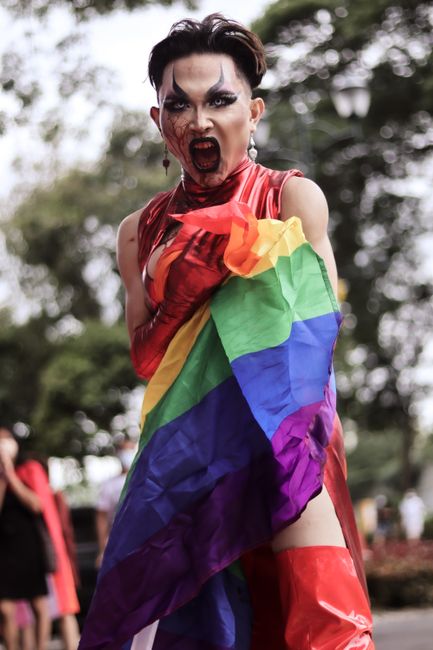
Amsterdam’s queer community is also reclaiming public spaces through art and activism. At the annual Queer & Straight Alliance (QSA) festival, organizers unveiled plans for an interactive installation in the heart of Vondelpark—a large wooden structure adorned with lockets that visitors can add notes or memories to, symbolizing connections formed across generations and identities. The community’s involvement extends beyond physical events; online platforms like Q&A forums and social media groups have become crucial spaces for dialogue and support. During one such gathering on Instagram Live, activists shared stories of resilience, from finding love during the pandemic to bureaucratic hurdles in obtaining legal recognition. One notable moment at the festival was a collaborative performance by local drag queens who transformed the main stage into a vibrant, colorful spectacle celebrating non-traditional relationships. The audience erupted in cheers as performers took center stage, their costumes reflecting a kaleidoscope of gender expressions and identities. Organizer Lisa de Graaf, who helped coordinate the event, expressed her hope that such performances would inspire more visibility for non-monogamous relationships. In the bustling neighborhood of De Baarsjes, a community center called Queer Hub has become a hub for these discussions and events. Members gather here daily to participate in workshops on relationship dynamics, learn about local resources, and engage in thoughtful debates over coffee and snacks. Marlene Schouten, whose murals grace the walls with messages of inclusivity, often visits the center to share her insights and creative projects. At Queer Hub, the conversation extends beyond personal relationships into broader societal issues. A recent workshop focused on economic barriers faced by queer individuals in Amsterdam. Participants discussed how financial instability can strain relationships and contribute to feelings of isolation. The event concluded with a panel where attendees shared stories of financial struggles, emphasizing the need for more accessible housing options and better support systems. As the sun sets over Vondelpark, members of the community gather for nightly walks, sharing stories under the starlit sky. These moments are as important as any workshop or discussion; they are times when the weight of systemic issues feels lighter, replaced by the warmth of camaraderie and mutual understanding. Theo van der Meer reflects on these evenings, “These moments remind us that we’re not alone in our journey. We build each other up through shared experiences.” Amsterdam’s queer community continues to evolve, pushing boundaries while fostering a sense of belonging for all identities. Through art, activism, and everyday conversations, they are carving out a future where love and relationships are as diverse and complex as the city itself.
About the Author
G
Grace Petersen
Staff writer at ThePinkPulse — covering LGBTQ+ news, culture, and community stories.