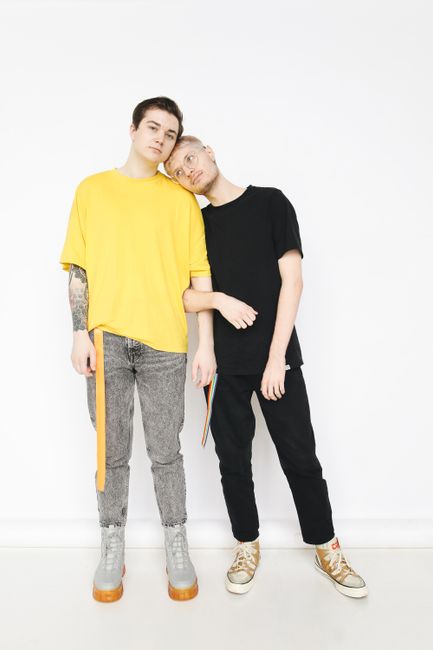
Rainbow Families in Rehoboth Beach Rock Matching Pride Outfits All Summer
The sun hangs low over the boardwalk at Rehoboth Beach as the Alvarez-Santos family steps off the sand in coordinated sets of linen shirts printed with overlapping rainbow arcs. Salt clings to the fabric edges while the youngest, six-year-old Mateo, tugs at the matching pocket sq
fashion
The sun hangs low over the boardwalk at Rehoboth Beach as the Alvarez-Santos family steps off the sand in coordinated sets of linen shirts printed with overlapping rainbow arcs. Salt clings to the fabric edges while the youngest, six-year-old Mateo, tugs at the matching pocket sq
#pride-month#pride-2026#this-week
L
Lila Narayan
Jun 13, 2026 · 5 min read
Share
X / Twitter
Facebook
Instagram
Threads
Reddit
LinkedIn
Copy Link
Email
The sun hangs low over the boardwalk at Rehoboth Beach as the Alvarez-Santos family steps off the sand in coordinated sets of linen shirts printed with overlapping rainbow arcs. Salt clings to the fabric edges while the youngest, six-year-old Mateo, tugs at the matching pocket square on his father’s chest. A vendor nearby sells iced lemonade for three dollars a cup, and the clink of plastic lids mixes with the steady roll of waves against the jetties. No one pauses for photos longer than a minute; the outfits are meant for movement, from the volleyball net at the water’s edge to the shaded benches along Baltimore Avenue. Rehoboth has long drawn families who want both the ordinary routines of beach vacations and the visible language of chosen kinship. Matching clothing turns that language into something wearable rather than spoken. Parents report that the simple repetition of color and pattern reduces the daily negotiations over what counts as appropriate public expression. Local tailors note that orders for family sets have risen steadily since May, with most requests specifying breathable cotton or linen blends priced between thirty-five and fifty-five dollars per garment. The choice carries weight because public displays of family resemblance still invite comment in many towns; here the comments tend to be requests for the name of the seamstress. On the second floor of the old firehouse turned community center on Rehoboth Avenue, tailor Lena Ortiz measures a set of three for the Patel-Kim household. The parents chose a pattern of narrow rainbow stripes broken by a single navy block on each sleeve, a detail that lets the children keep their preferred solid shorts without breaking the overall line. Ortiz finishes the last buttonhole at 4:15 p.m. on a Tuesday and hands the shirts across the counter for sixty-eight dollars total. Later that evening the family wears them to the weekly sand-castle contest at the foot of Laurel Street. A stranger asks where the fabric came from; one of the children answers without looking up from the moat they are digging. Not every household joins the coordinated effort. Down the block from the community center, single parent Marcus Reed keeps a drawer of mismatched Pride shirts accumulated over eight years. He attends the same sand-castle contest in a faded tank top while his daughter wears a plain blue dress. Reed says the pressure to match can flatten individual taste, especially when one child prefers solids and another wants cartoon prints. At the same event, two grandparents visiting from Wilmington refuse to wear anything beyond small enamel pins, citing discomfort with bright colors against their usual summer wardrobe of khaki and white. The difference shows up most clearly in the evening light: some groups form a single visual block, while others appear as separate figures sharing the same stretch of blanket. Stop by Ortiz’s shop above the former firehouse any weekday between ten and five; she keeps a rack of sample swatches and will cut a test piece for five dollars before committing to a full order. The next family picnic organized by the Rehoboth LGBTQ+ Parents Network meets at Grove Park on the third Saturday of each month at eleven in the morning; participants are asked to bring one dish and to note any fabric allergies on the sign-up sheet posted at the park office. For those who prefer to browse finished pieces first, the small boutique inside the Boardwalk Plaza Hotel stocks ready-made children’s sizes in rainbow seersucker for twenty-eight dollars each, with adult counterparts available in the same print. Follow the network’s simple mailing list for updates on pop-up sewing sessions held in the community center basement when demand spikes before the annual fireworks display. The fabric keeps its color after three washes in the coin laundry on First Street, the same machines that handle towels crusted with salt and sunscreen. Families return the following weekend already planning small variations for August, a single changed button or an added pocket, because the point is never the outfit itself but the ease of recognizing one another across a crowded stretch of sand.
At the Rehoboth Beach Farmers Market on Saturday mornings, the Rodriguez family appears in linen shirts cut from the same bolt as the ones sold at Ortiz’s shop, the rainbow arcs now paired with small anchor motifs stitched near the cuffs. The parents, both teachers at the local elementary school, chose the pattern after their oldest child requested something that would read as festive without drawing stares from visiting relatives. A vendor selling honey samples pauses to ask about the thread count, and the exchange ends with an order placed for two adult sizes in the same fabric, delivered the following week. The market sits two blocks from the boardwalk, its stalls arranged under white tents that flap in the salt wind, and the coordinated shirts stand out against the plain canvas backdrops without requiring any announcement. Further south along the boardwalk, the annual sand-sculpture contest draws a different crowd where one grandfather, visiting from Dover, buys a single rainbow bandana at a kiosk rather than a full shirt, tying it to his straw hat before joining his grandchildren at the judging table. The fabric choice still registers as deliberate, a small signal that registers with other parents who nod in passing. Local seamstresses like Ortiz have begun offering add-on embroidery services for an extra eight dollars, turning the basic sets into pieces that can incorporate a child’s initial or a favorite pet silhouette while preserving the overall repeat of color. These adjustments keep the garments in rotation through the rest of the summer, washed alongside beach towels in the same coin laundry and hung to dry on the railings of rented cottages.
Tags:#pride-month#pride-2026#this-week
About the Author
L
Lila Narayan
Staff writer at ThePinkPulse — covering LGBTQ+ news, culture, and community stories.