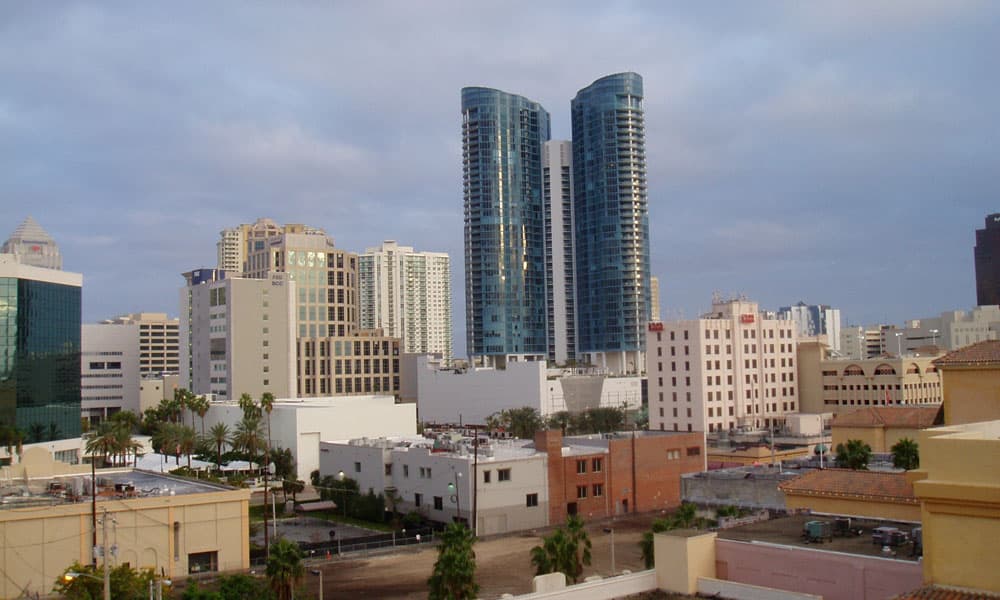
Wilton Manors Holds Ground as Florida's Queerest Town
While national outlets obsess over culture war abstractions, Wilton Manors residents are building something quieter and more durable: a functioning town where LGBTQ people live, work, and age in place. It's not flashy. But it's real.
Community
While national outlets obsess over culture war abstractions, Wilton Manors residents are building something quieter and more durable: a functioning town where LGBTQ people live, work, and age in place. It's not flashy. But it's real.
On NE 4th Avenue, a block from the town hall, a small storefront prints custom t-shirts for local businesses and pride events. Down the street, an architect firm designs homes and renovations. Two blocks over, a salon books appointments for people who've lived in Wilton Manors for decades. These aren't tourist attractions or Instagram moments. They're the unglamorous infrastructure of a town that works.
Wilton Manors—population roughly 5,600, located just west of Fort Lauderdale—is the only incorporated municipality in Florida with an LGBTQ majority. It has been since the 1980s. That fact doesn't make national news anymore. Pride parades happen in bigger cities. Drag brunches draw crowds elsewhere. But something more important happens here: ordinary life, sustained across generations, built on the assumption that queer people deserve to own homes, run businesses, and grow old in a place that doesn't require them to code-switch or hide.
That assumption has never been more fragile in Florida.
The state's political machinery has spent years working to restrict drag performance, limit gender-affirming care, control what teachers can discuss, and tighten adoption laws affecting same-sex couples. While outlets like The Advocate and Queerty cover the headline battles, the real test of LGBTQ resilience isn't playing out in legislature hearing rooms—it's playing out in towns like Wilton Manors, where residents must decide whether to stay, whether to build, whether to believe their town will still exist as they know it in another decade.
Wilton Manors Town Hall, a modest brick building on NE 4th Avenue, has a town commission that includes openly LGBTQ members and has consistently pushed back against state overreach. The commission passed resolutions against the "Don't Say Gay" bill before it became law. It has defended drag performers' right to perform. It has made clear that the town's character—shaped by decades of queer residents choosing to settle here, raise families, open businesses—is not negotiable.
But municipal votes don't stop state laws. They don't prevent the chilling effect that comes from living in a state where politicians make your existence a campaign issue.
On NE 26th Street, the commercial spine of Wilton Manors, a mortgage officer at a local firm helps LGBTQ couples navigate home loans in a state that no longer recognizes same-sex marriage for certain legal purposes. An atelier on the same block provides services to residents who have lived here through multiple recessions and cultural shifts. A wellness center offers acupuncture and therapy to a client base that includes longtime residents managing the stress of living under perpetual political threat. These businesses don't advertise as LGBTQ-owned. They just exist, quietly serving a community.
The town's character is legible if you know where to look. Rainbow flags hang from residential porches. A custom t-shirt shop on NE 4th Avenue (FTLFLY Custom Tees) has printed shirts for local events for years. The printing company on NE 26th Street has done the same. These are not major economic drivers. They're texture. They're proof that queer people here aren't just passing through—they're investing in the infrastructure of daily life.
Wilton Manors' real estate market tells another story. Property values have climbed steadily, attracting investment and new residents. That's good for existing homeowners. It's also complicated for a town built on the assumption that working-class queer people could afford to live here. Gentrification is its own kind of erasure. You can lose a place not to political backlash but to market forces. Both are happening simultaneously in Wilton Manors, creating a strange pressure: the town is becoming more expensive even as the state becomes more hostile to the people who built it.
Yet the town persists. The commission still meets. Residents still file for business licenses. Architects still design additions to homes people have owned for thirty years. A wellness center still books clients. These actions seem small only if you're not paying attention to how power works. Power works through attrition—through making people feel unwelcome, unsafe, or financially unable to stay. Wilton Manors residents who continue to invest in the town, to start businesses, to renovate homes, to seek therapy from local practitioners, are actively resisting that attrition.
There's no grand narrative here. No celebrity visits or national media tours. No "destination LGBTQ community" branding. Wilton Manors doesn't need to be famous. It needs to be stable. It needs to remain a place where queer people can build lives on the assumption that the place will still be here, still be theirs, a decade from now.
That's what's actually at stake in a town like this. Not whether it makes the news, but whether it survives—whether the people who chose to build here can stay, whether the young people who grew up here can afford to come back, whether the old people who built it can age in place. Wilton Manors is a test of that possibility. And right now, it's still standing.