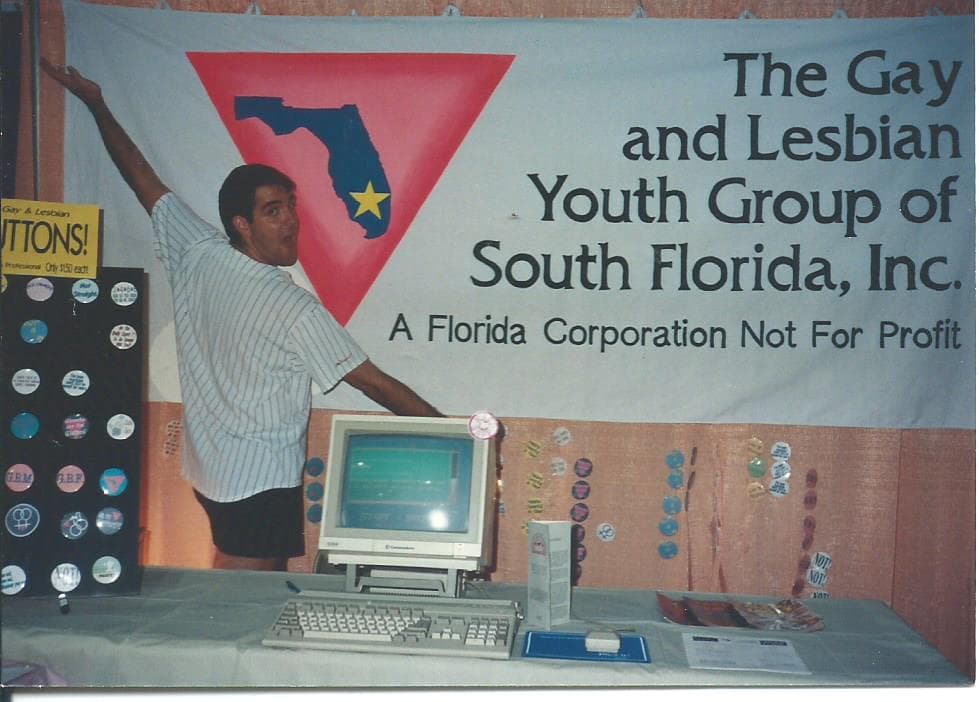
As anti-LGBTQ legislation spreads across Florida, this small village has become a quiet anchor for queer residents seeking stability and community. What makes it work isn't performative allyship—it's infrastructure, consistency, and the simple fact that gay people own businesses here.
Community
As anti-LGBTQ legislation spreads across Florida, this small village has become a quiet anchor for queer residents seeking stability and community. What makes it work isn't performative allyship—it's infrastructure, consistency, and the simple fact that gay people own businesses here.
#Wilton Manors#Florida LGBTQ#Local Economy#Community Infrastructure#Queer South
A
Aisha Ramos
Jun 3, 2026 · 4 min read
On a Thursday afternoon on Wilton Drive, a man in his sixties walks out of a salon with fresh color and a blowout. He stops to chat with the owner, who knows his name, his partner's name, and that he's been coming here for three years. This exchange—unremarkable anywhere else in America—carries weight in Florida in 2025.
Wilton Manors, a village of roughly 12,000 people in Broward County just north of Fort Lauderdale, has become something increasingly rare in the state: a place where gay and trans residents can move through daily life without constantly bracing for harm. Not because of grand gestures or Pride proclamations. Because of infrastructure.
The village sits in a state where the governor has gutted public funding for Pride events, where anti-DEI bills have reshaped education, and where attacks on trans people have become routine political theater. Meanwhile, in Wilton Manors, a barber shop owner at Hair by Ani runs a business on North Dixie Highway. A fitness studio operates at Peak Fitness Wilton Manors. An integrative medical practice on Northeast 26th Street serves clients who may not find affirming care elsewhere. These aren't statements. They're jobs. They're revenue. They're people's lives.
The distinction matters now more than it ever has.
Wilton Manors wasn't always a gay mecca. The village incorporated in 1953 and spent decades as an unremarkable suburban pocket. But beginning in the 1990s, LGBTQ residents—particularly gay men—began moving in. They bought modest homes, renovated them, opened businesses. The demographic shift was gradual, then unmistakable. By the early 2000s, Wilton Manors had become synonymous with the gay South—smaller than Key West, less touristy than Miami Beach, but unmistakably queer.
What distinguishes Wilton Manors from other gay enclaves in Florida is that it actually functions as a town, not just a destination. People live here. They raise children here. They get their hair cut here, eat dinner here, go to the gym here, see their doctors here. The economy is built on residents, not tourism dollars.
That matters because tourism-dependent gay spaces are increasingly vulnerable. Key West's Pride lost state funding under Governor DeSantis's administration. Tourism can be yanked away by political whim. Residents—people with mortgages, kids in school, jobs they've built—don't leave as easily.
Rosen Fine Art operates on North Dixie Highway, anchoring the cultural side of the village's commercial strip. A restaurant like El Calero provides everyday gathering space. Woody Friese Architecture handles the real estate and renovation projects that keep property values stable and the housing stock modern. These are the unglamorous fundamentals of community survival.
The political climate in Florida has created a pressure cooker for LGBTQ people. Trans youth face legislative attacks. Healthcare access is narrowing. Drag performers navigate increasingly hostile legal frameworks. Pride events lose funding. In this environment, places like Wilton Manors become refuges not because they're perfect, but because they're functional.
A trans person living in Wilton Manors might still face discrimination elsewhere in Florida. But at home, on their street, in their neighborhood businesses, they exist without constant threat. That's not a "safe space"—that phrase has been hollowed out by corporate marketing. It's something simpler and harder to build: a place where the baseline conditions for living are met.
Broward Integrative Medical on Northeast 26th Street represents this kind of practical infrastructure. Healthcare access for LGBTQ people in Florida has become increasingly fraught, with providers either absent or hostile. A medical practice that understands LGBTQ health needs isn't a luxury. It's essential.
The village's infrastructure extends to its governance. Wilton Manors has elected openly gay mayors and commissioners for decades. Municipal services don't discriminate. Code enforcement doesn't target gay-owned businesses. This sounds basic because it should be. But in a state where the highest office is actively hostile to LGBTQ existence, basic fairness from local government is increasingly precious.
What makes Wilton Manors different from other gay neighborhoods in Florida is scale and authenticity. It's small enough that people actually know each other. It's not a fantasy or a brand. It's a place where people go to work, live their lives, and build futures. The businesses here aren't LGBTQ-owned as a marketing angle. They're LGBTQ-owned because queer people live here and needed goods and services.
There's a risk in describing Wilton Manors too romantically. The village faces the same challenges as other small communities: aging infrastructure, economic pressure, the slow erosion of main streets by online commerce. It's not utopia. It's a place where gay people can exist without constant defensive posturing, which in 2025 Florida is itself remarkable.
The broader question is whether places like Wilton Manors can survive as anchors for LGBTQ life in a hostile state. Tourism-dependent gay spaces are being strangled by legislation. Larger cities like Miami and Fort Lauderdale remain vibrant but increasingly expensive and fractured. Smaller towns like Wilton Manors—stable, residential, built on actual community rather than spectacle—might prove more resilient.
That Thursday afternoon scene—a man getting his hair done, knowing his stylist, exchanging real conversation—that's not nothing. In the current Florida political moment, it's everything. It's the difference between existing and living. Between passing through and belonging. Wilton Manors has built the infrastructure for the latter, which is why people stay.
Share:
Tags:#Wilton Manors#Florida LGBTQ#Local Economy#Community Infrastructure#Queer South
About the Author
A
Aisha Ramos
Staff writer at ThePinkPulse — covering LGBTQ+ news, culture, and community stories.