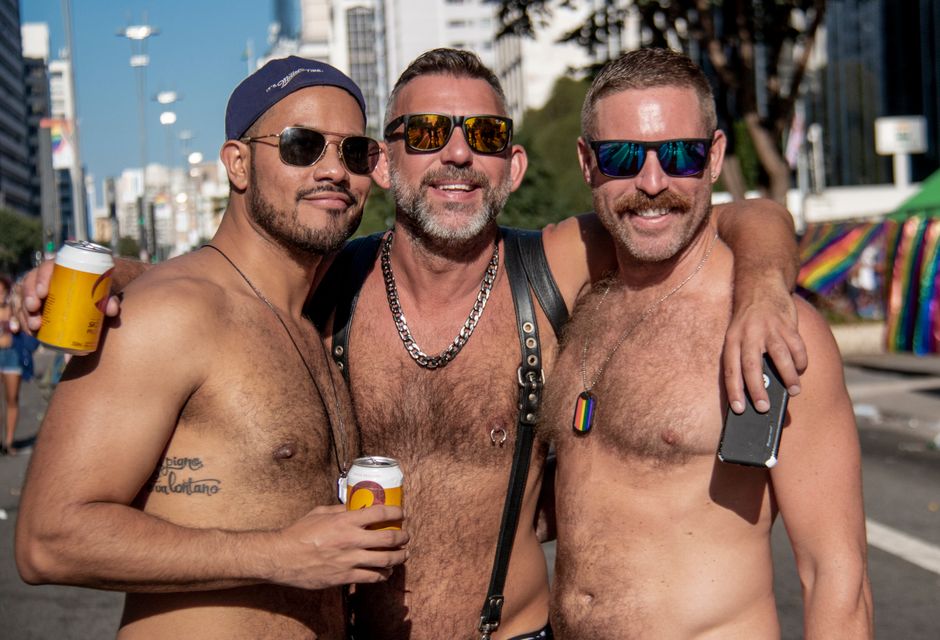
A local effort to preserve LGBTQ records in Atlanta's institutional collections is gaining momentum, even as federal archival access remains uncertain. One organization is working to ensure the city's queer past doesn't disappear.
Community
A local effort to preserve LGBTQ records in Atlanta's institutional collections is gaining momentum, even as federal archival access remains uncertain. One organization is working to ensure the city's queer past doesn't disappear.
The cardboard boxes stacked in a Midtown office contain decades of photographs, meeting minutes, and personal correspondence—the accumulated paper trail of Atlanta's LGBTQ organizing from the 1970s onward. Most of it has never been digitized. Most of it exists in no formal archive. Most of it could be lost within a generation.
This is the problem that brought together a coalition of local historians, nonprofit leaders, and community members last fall. Their mission is straightforward but labor-intensive: document Atlanta's queer history before it vanishes into estate sales and dumpsters.
The effort comes at a moment of national anxiety about archival access. Recent developments at the federal level have raised concerns among historians and LGBTQ advocates about the future of publicly available records related to queer life and activism. The National Archives has faced scrutiny over how it catalogs and preserves LGBTQ materials, with some archivists warning that institutional neglect could erase critical documentation of community organizing, medical history, and cultural production.
But Atlanta's effort is distinctly local in scope and ambition. Rather than waiting for federal institutions to act, organizers here are working directly with community members to collect and preserve materials that document the city's specific history—the bars that operated under constant police pressure, the activists who fought for domestic partnership benefits in the 1990s, the AIDS crisis as it unfolded in Georgia's largest city, the emergence of Black queer nightlife and arts scenes that shaped the city's cultural identity.
"What we're finding is that people have these materials but they don't know what to do with them," said one local archivist involved in the initiative, speaking on condition of anonymity to discuss ongoing collection efforts. "A retired activist has a box of newsletters from a defunct organization. A family cleans out a relative's apartment and finds photographs from Pride events in 1985. Without a clear place to deposit these things, they often end up in the trash."
The coalition has established a preliminary protocol: community members can contact local organizations to report materials they possess. Volunteers photograph documents, create basic metadata, and coordinate with institutions that have expressed willingness to house collections. The process is unglamorous and unglamorous—no funding, no dedicated staff, no climate-controlled storage facility. Just spreadsheets and phone calls and the understanding that institutional memory requires deliberate, continuous labor.
One local nonprofit that has committed to participating in the effort is already receiving inquiries. In the past three months alone, staff members report fielding calls from residents who discovered materials in estates, attics, and storage units. A collection of flyers from a defunct LGBTQ community center in east Atlanta arrived last month. Photographs from a 1990s Pride parade surfaced in a donation to another organization. A personal diary from someone who participated in early AIDS activism in the city was offered by a family member who recognized its historical value.
The challenge is scale. Atlanta's LGBTQ community has existed for decades, with multiple distinct neighborhoods, scenes, and organizing traditions. The city's queer history is not monolithic—it includes the experiences of working-class people, people of color, trans individuals, and others whose stories often get marginalized in mainstream historical narratives. Capturing that complexity requires more than a few volunteers with a spreadsheet.
"We're not trying to create a comprehensive archive," the archivist noted. "We're trying to create a network where materials can be preserved and eventually made accessible. Even if that happens imperfectly, even if it takes years, it's better than nothing."
The initiative faces real obstacles. Many potential donors worry about privacy—their own or that of people mentioned in documents. Some materials are fragile and require professional handling that volunteers cannot provide. Storage remains a persistent problem; organizations that have agreed to house collections are already running out of space. And there is the fundamental challenge of reaching people who have materials but don't know they're historically significant.
Still, the work continues. Last month, volunteers met to discuss how to approach the problem of oral history—recordings of people who lived through key periods of Atlanta's LGBTQ history. Some people in the community are willing to be interviewed; others are not. Some interviews are being conducted informally and stored on personal devices; others exist only in memory. The coalition is developing a protocol for how to capture these accounts in a way that respects both historical documentation and individual privacy.
The broader context is impossible to ignore. National debates about LGBTQ history—what gets taught in schools, what gets preserved in public institutions, what gets erased—have intensified. Some communities have seen efforts to remove LGBTQ materials from libraries and archives. Others have experienced pressure to deprioritize queer history in favor of other institutional priorities. Against this backdrop, Atlanta's grassroots archival work takes on additional significance. It is a deliberate assertion that queer history matters, that it deserves documentation, and that communities themselves can drive preservation efforts when institutions fail to do so.
"History doesn't preserve itself," the archivist said. "Someone has to decide that it's worth saving. Someone has to do the work. Right now, in Atlanta, that someone is us."
The coalition is accepting inquiries from community members who have materials to contribute. The process is informal, but the commitment is clear: Atlanta's queer past will not disappear by default. It will only disappear if people allow it to.