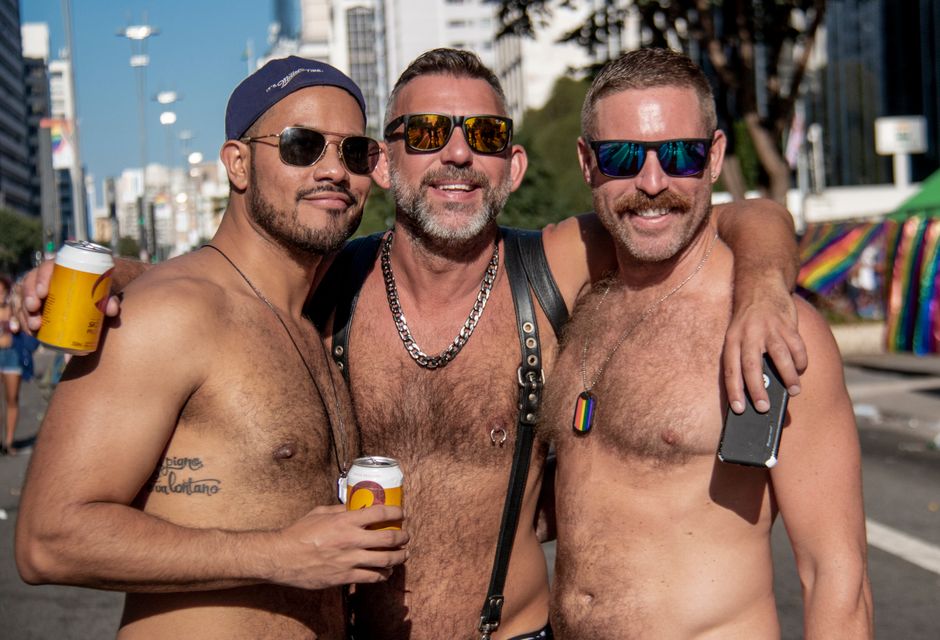
Boston Pride's New Parade Route Reclaims the Streets
After years of the same predictable march, Boston Pride is shaking things up with a completely new route that winds through neighborhoods most Pride celebrations have ignored. Organizers say it's time to show up where queer people actually live and work—not just where the tourists expect to find them.
Community
After years of the same predictable march, Boston Pride is shaking things up with a completely new route that winds through neighborhoods most Pride celebrations have ignored. Organizers say it's time to show up where queer people actually live and work—not just where the tourists expect to find them.
The parade route for Boston Pride has barely changed in two decades. Same streets. Same viewing spots. Same comfortable predictability. This year, that ends.
Boston Pride's organizing committee announced in early January that the 2024 parade will follow an entirely new path through the city, one that organizers say reflects where the LGBTQ community actually exists—not where city planners and corporate sponsors have traditionally funneled them.
The new route begins in the South End, moves through Jamaica Plain, and concludes in Roxbury, a deliberate choice that senior organizer and longtime Boston Pride volunteer Marcus Chen described as "returning the parade to the neighborhoods that raised us." For the past fifteen years, the parade has primarily wound through downtown corridors and ended near the Public Garden, a path that Chen argues sanitized Pride into a spectator sport for out-of-state visitors rather than a statement by the people living here.
"We're not marching for Instagram photos," Chen said in a recent phone call. "We're marching because queer people work retail jobs on Tremont Street. We live in Jamaica Plain. We raise kids in Roxbury. The parade should reflect that reality."
The decision hasn't been without controversy. Several corporate sponsors who've underwritten Boston Pride for years expressed concern about the logistical challenges of the new route. One major bank—which requested anonymity—initially threatened to withdraw funding before the committee pushed back, reminding them that Pride began as a riot, not a corporate photo opportunity. The sponsor ultimately recommitted.
What makes this year's pivot particularly significant is the organizing committee's explicit refusal to partner with some of the larger national LGBTQ media outlets that typically cover Pride season. While outlets like The Advocate and Queerty have spent the past decade covering Pride as a feel-good consumer event—focusing on corporate floats and celebrity appearances—Boston Pride's organizers made clear they wanted local press to lead the narrative. "We want people reading The Pink Pulse to understand what this means for Boston," Chen said. "Not what it means for the national Pride industrial complex."
The South End starting point carries particular weight. Home to the city's oldest continuously operating gay bars and historically the neighborhood where queer people of color built community when other areas of Boston actively excluded them, the South End has been steadily gentrified over the past decade. Starting the parade there is a deliberate act of remembrance—a way of saying that this neighborhood's queer history matters even as its demographics shift.
From the South End, marchers will move through a corridor that passes several queer-owned businesses, community health centers, and social service organizations that have served the LGBTQ community for decades. Unlike previous routes that prioritized downtown's commercial districts, this path acknowledges the infrastructure of mutual aid and survival that queer Boston actually built.
Jamaica Plain, the second major hub on the new route, has become increasingly important to Boston's queer landscape in recent years. The neighborhood hosts several community organizations focused on queer youth, trans health services, and cultural programming. Organizers deliberately chose to make Jamaica Plain a major stopping point rather than a quick march-through, allowing the community to gather and celebrate without the downtown crush.
The final leg through Roxbury represents the most significant departure from tradition. Roxbury's queer community—particularly queer people of color—has historically been marginalized even within Boston's LGBTQ spaces. Centering Roxbury in the Pride parade is an explicit statement that the organizers want to dismantle the racial and economic segregation that has long characterized how Boston's gay community organizes itself.
"We're asking people to show up in neighborhoods they might not usually go to," Chen explained. "And we're asking those neighborhoods to show up for Pride. That's not comfortable. That's not easy. But it's necessary."
Logistically, the new route means different street closures, different staging areas, and different accessibility considerations. The committee has already begun working with the Boston Police Department and the city's transportation office to ensure adequate resources—a conversation that revealed some initial resistance from city officials more accustomed to managing a contained downtown parade. That resistance, Chen noted, was "very telling about whose version of Pride the city actually prefers to support."
The parade date remains set for June, with specific timing and street closure details to be announced in the coming weeks. Organizers are explicitly asking marchers not to rely on corporate transportation or commercial viewing packages, instead encouraging people to use public transit and to gather organically in the neighborhoods along the route.
For a city that has long packaged its LGBTQ history as a liberal credential while failing to adequately resource queer communities of color, trans people, and working-class queers, this year's Boston Pride represents something genuinely different: a refusal to be convenient. The parade won't be easier to navigate. It won't be more profitable for downtown businesses. It won't generate the kind of polished photos that national media outlets love to recycle every June.
Instead, it will be what Pride was always supposed to be: a march through the actual streets where queer people live, organized by and for the people who call Boston home.