Center City's Queer Anchor Still Has Ground to Gain
The neighborhood around 13th and Locust has been Philadelphia's de facto gay district for decades, but recent shifts in who lives here and what they need reveal a community grappling with gentrification, displacement, and what it means to hold space in 2024.
Community
The neighborhood around 13th and Locust has been Philadelphia's de facto gay district for decades, but recent shifts in who lives here and what they need reveal a community grappling with gentrification, displacement, and what it means to hold space in 2024.
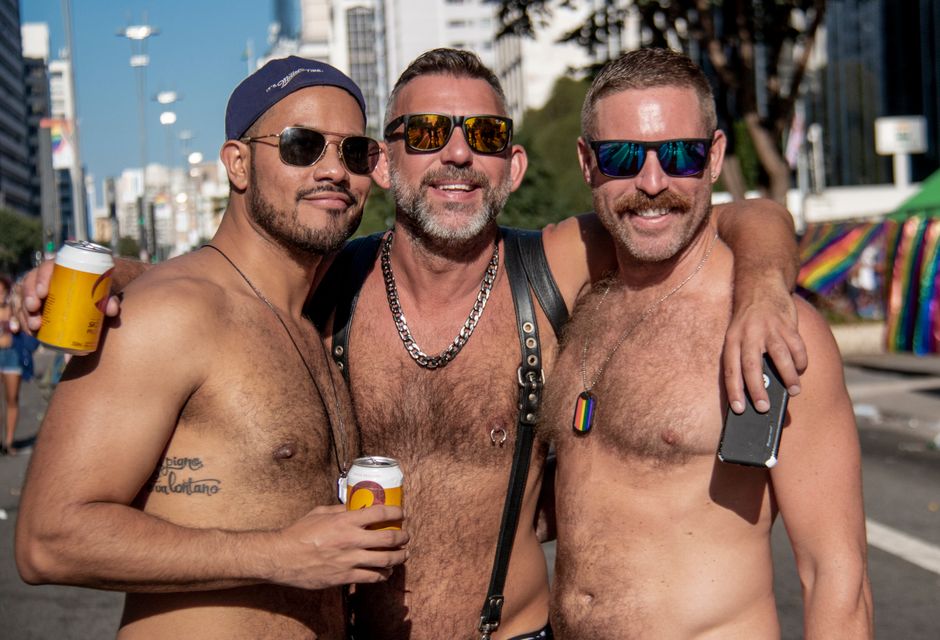
On a Thursday evening, the corner of 13th and Locust pulses with the kind of casual mixed crowd that would have seemed impossible in Philadelphia thirty years ago. A woman in a blazer picks up takeout next to a teenager in a crop top. Someone's dog waits outside a bar while its owner orders a drink. This is Center City—or more specifically, the blocks immediately surrounding Rittenhouse Square—and it remains the epicenter of Philadelphia's visible queer life, even as the nature of that visibility has fundamentally changed.
For generations, this neighborhood functioned as Philadelphia's queer anchor. The bars that opened here in the 1980s and 1990s were not incidental to the neighborhood's character; they were the neighborhood's character. They were where people came to be around their own, to find partners, to build community in a city that wasn't always kind to people like them. Walk these blocks today and you'll still see evidence of that history—a rainbow flag hanging from a window, a bar still operating on Wilton Drive, the accumulated weight of decades of queer Philadelphian memory embedded in the sidewalk itself.
But something has shifted, and not in the straightforward way gentrification narratives usually suggest. Center City has become more expensive, yes. The neighborhood has become whiter and wealthier, yes. Longtime residents have been pushed out, yes. But the queer people who remain here are not simply being replaced by straight people. Instead, the neighborhood is experiencing a kind of demographic sorting—younger queer people, often with more money or family support, have moved in, while older queer people, many of them people of color, have been pushed out to Northeast Philadelphia, to the suburbs, or out of the city entirely.
This matters because it changes what the neighborhood is and what it offers. The gay bars that once served as community anchors for working-class queer people now function more as destinations for tourists and young professionals out for a night. The neighborhood's queerness has become increasingly abstract, a branding tool, rather than a lived necessity for people who had nowhere else to go. Walk into a bar on Wilton Drive on a Friday night and you might see a bachelorette party from the suburbs, a group of straight friends celebrating a birthday, and yes, queer people, but the ratio has shifted in ways that matter.
What makes Center City worth paying attention to now is precisely this contradiction. The neighborhood remains undeniably important to Philadelphia's queer infrastructure. There are still bars here, still organizations, still the accumulated institutional knowledge of decades of queer organizing. But that infrastructure is increasingly fragile, increasingly oriented toward consumption rather than community, increasingly inaccessible to the people who built it.
For anyone actually living in or visiting Center City's queer spaces, three specific recommendations:
First, go to a bar on Wilton Drive on a weekday evening rather than a weekend. The weekday crowd is older, more mixed, more likely to include longtime residents and people for whom this is not a novelty. You'll have better conversations. You'll feel the actual community rather than the performance of community.
Second, spend time in the neighborhood outside of the bars. Walk south on Broad Street toward Washington Square. Sit in Rittenhouse Square itself. The queer life of Center City is not just in the designated gay blocks; it's distributed throughout the neighborhood in ways that are less visible but more real. Coffee shops, bookstores, apartment stoops—this is where people actually live.
Third, seek out the organizations that have remained committed to serving queer people with the fewest resources. These organizations are still here, still operating, still doing the work that the bars stopped doing years ago. Their presence is quieter, less profitable, less visible, but no less essential.
The insider tip: Pay attention to who is not here. The neighborhood's queerness is increasingly visible and increasingly exclusive. The people who were priced out, the people who moved because their community was no longer affordable, the people who never had the resources to move to Center City in the first place—they're still in Philadelphia. They're in neighborhoods that don't have rainbow flags on every block, neighborhoods that don't get written about in lifestyle publications, neighborhoods where queer life continues without the infrastructure or visibility that Center City once provided.
Center City remains Philadelphia's most visible queer neighborhood, and that visibility matters. It provides a cultural anchor, a place where people can move through the world as themselves without explanation, a neighborhood where queerness is not a scandal but a fact. But the neighborhood's current form—expensive, increasingly white, increasingly oriented toward consumption—represents a particular vision of queerness that leaves a lot of people behind.
The question facing Center City now is not whether it will remain queer. It will. But what kind of queerness will it enable, and for whom? Right now, the answer is increasingly clear: a queerness for people with money, a queerness that is beautiful and visible and fundamentally incomplete. That's not a failure of the neighborhood itself. It's a failure of a city that has allowed its most important queer infrastructure to become a luxury good.