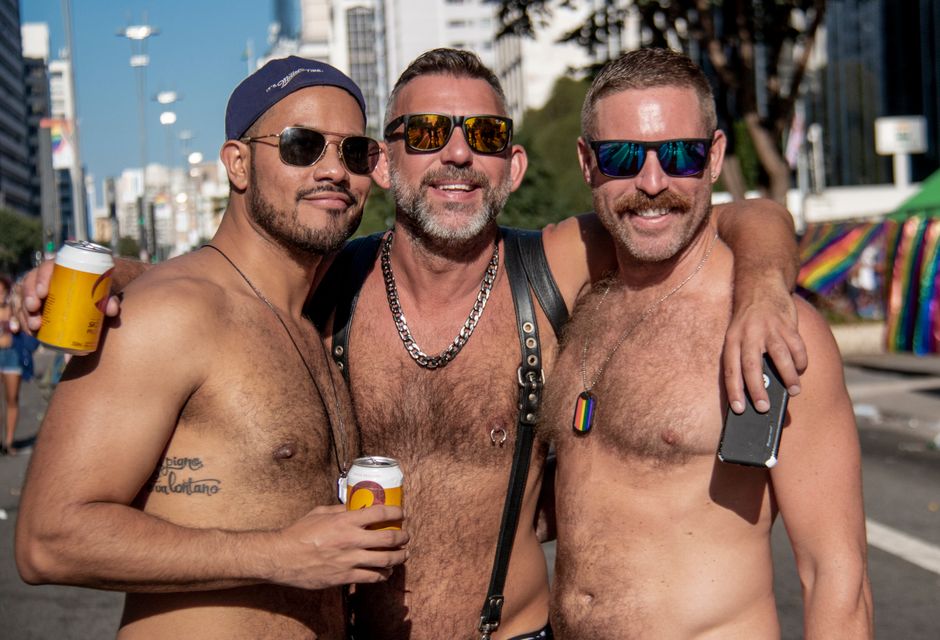
Jamaica Plain has long been a destination for LGBTQ Bostonians seeking affordable rent and community. But as the neighborhood changes, longtime queer residents are watching the place that saved them become unrecognizable.
Community
Jamaica Plain has long been a destination for LGBTQ Bostonians seeking affordable rent and community. But as the neighborhood changes, longtime queer residents are watching the place that saved them become unrecognizable.
The community center on Centre Street has been hosting Pride events for decades, but this June, the volunteer coordinator couldn't find enough people willing to help organize. Half the names on last year's roster had moved to the suburbs or out of state entirely. The coordinator, who has lived in Jamaica Plain for seventeen years, sat in the empty meeting room and realized something had shifted. The neighborhood that became a refuge for queer Bostonians fleeing more expensive, less accepting parts of the city was now pricing out the very people who built it.
Jamaica Plain's relationship with LGBTQ life in Boston is neither simple nor consistently welcoming, despite what newcomers might assume. The neighborhood didn't become queer-friendly overnight. In the 1980s and 1990s, it was where people went when they couldn't afford Back Bay, when they needed neighbors who wouldn't call the cops on them, when they wanted to live openly without the surveillance that came with more upscale addresses. Artists, activists, and working-class queer people of color established themselves here not because JP was progressive—it was rough, underfunded, and ignored—but because it was the only place they could afford to exist.
That affordability is essentially gone now. A one-bedroom apartment in Jamaica Plain that rented for $800 in 2010 costs $1,800 today. The neighborhood's reputation as a queer destination has become a selling point for real estate developers and landlords, who market it to young professionals seeking "authentic" urban living. The irony is brutal: the very queerness that made Jamaica Plain accessible to poor and working-class LGBTQ people has become a brand asset that prices them out.
Walk down Centre Street on a Saturday afternoon and you'll see the transformation. There's a newer coffee shop where a longtime Puerto Rican-owned bodega used to operate. A craft cocktail bar occupies the space where queer elders used to gather. The longtime leather bar that served as a crucial social and sexual space for gay men in the neighborhood closed years ago. What remains are fragments—a rainbow flag in a window, a Pride poster in a bookstore—that feel more like decoration than infrastructure.
The queer organizations that remain in JP are stretched thin. A long-standing nonprofit serving LGBTQ youth operates out of a cramped office, their budget flat despite rising homelessness among trans and gender-nonconforming kids. The staff consists almost entirely of people who've been doing this work for a decade or more, sustained by commitment rather than resources. They watch younger queer people move to cheaper neighborhoods in Roxbury or Dorchester, or leave Boston entirely for cities with more affordable housing and less competitive dating markets.
Some longtime residents argue that Jamaica Plain's queerness was never meant to be permanent. It was a waystation, they say—a place to land, build community, figure yourself out, then move on. But that narrative erases the people for whom Jamaica Plain wasn't a waystation. For disabled queer people, for queer people of color, for undocumented queers, for those priced out of every other neighborhood in the city, Jamaica Plain was supposed to be the place you stayed. It was supposed to be the neighborhood that didn't cost a fortune, where you knew people, where you could build something.
The gentrification of Jamaica Plain's queer spaces is part of a larger Boston story about what happens when marginalized communities develop reputations as desirable places to live. The neighborhoods that were once refuges become destinations for investment. The people who made them interesting become obstacles to development. And the city's LGBTQ population scatters—pushed to the edges of the metro area, into suburbs where they're isolated, or out of Massachusetts entirely.
What's particularly grim is that Boston's LGBTQ infrastructure hasn't grown to match this displacement. There's no coordinated effort to preserve affordable housing for queer people. There's no city policy recognizing that gentrification is a queer issue. The nonprofits that serve LGBTQ Bostonians operate in scarcity, dependent on grant funding that shifts year to year. They're doing emergency work—housing people, feeding people, keeping trans kids alive—while the neighborhoods that once sustained community are transformed into luxury markets.
Some queer Bostonians have moved to neighborhoods farther out, building new scenes in places like Roxbury and Dorchester. These aren't Jamaica Plain—they lack the history, the established institutions, the sense of arrival that JP provided. They're newer, more fragmented, less visible on the city's mental map. But they're also more affordable, at least for now.
The question haunting Jamaica Plain's remaining queer residents is whether the neighborhood can be reclaimed, or whether it's already lost. There are people fighting—organizing around affordable housing, pushing back against landlords, trying to keep community institutions afloat. But the economics are brutal. You can't volunteer your way out of a real estate market that's determined to turn everything into condos.
Jamaica Plain didn't betray LGBTQ Bostonians. The city's housing market did. The neighborhood was simply too useful, too real, too full of people making something work on next to nothing. And in a city that treats queerness as a brand to market rather than a community to sustain, that made it inevitably temporary.