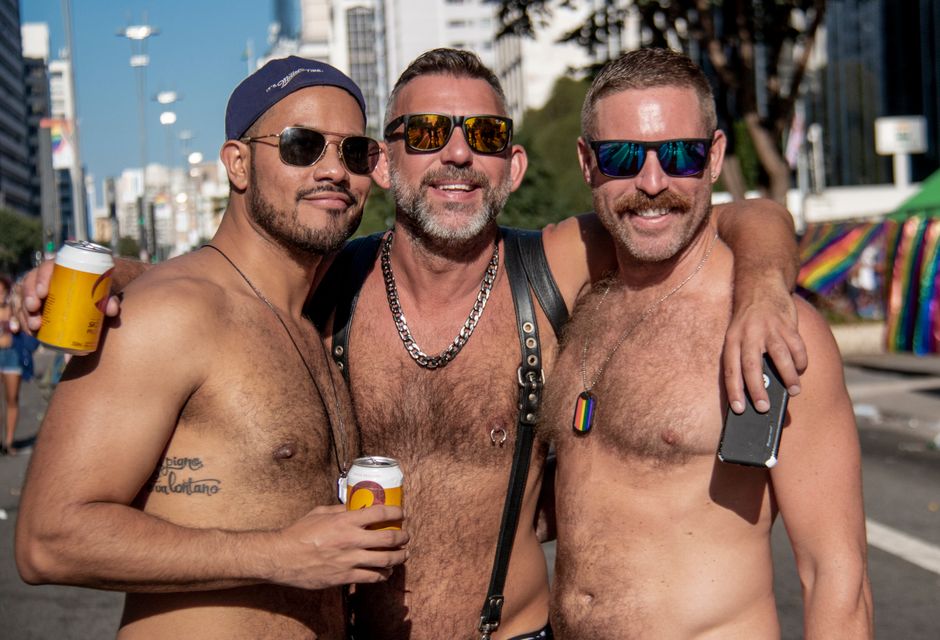
New Orleans Queer Artists Rally for Immigration Justice
A coalition of local LGBTQ creatives is hosting a fundraiser to support families separated by ICE detention—and they're doing it the New Orleans way, with art, music, and uncompromising solidarity. The event raises money for legal defense and reunification efforts while centering the voices of immigrant queers.
Community
A coalition of local LGBTQ creatives is hosting a fundraiser to support families separated by ICE detention—and they're doing it the New Orleans way, with art, music, and uncompromising solidarity. The event raises money for legal defense and reunification efforts while centering the voices of immigrant queers.
#immigration justice#LGBTQ activism#New Orleans#fundraiser#immigrant rights
L
Lila Nevada
Jun 5, 2026 · 5 min read
Share
X / Twitter
Facebook
Instagram
Threads
Reddit
LinkedIn
Copy Link
Email
The warehouse smells like fresh paint and possibility. Artists are hammering together wooden frames, testing sound equipment, arranging folding chairs in clusters that suggest conversation rather than lecture-hall rows. This is the staging ground for "Fronteras Sin Miedo" (Borders Without Fear), a fundraiser happening in New Orleans that refuses the polite distance most charity events maintain from their own cause.
The event, organized by a coalition of local LGBTQ artists and activists, aims to raise money for legal defense funds and family reunification efforts for immigrant queers caught in ICE detention. Unlike the abstract appeals that dominate national fundraising campaigns, this one centers the actual people affected—many of them from Central America and the Caribbean, many with roots in New Orleans' own Latino communities.
"We're not asking people to feel sorry," says one of the organizers, a visual artist who has been working with detained immigrants' families for three years. "We're asking them to show up and witness what's possible when we actually listen to each other."
The fundraiser combines performance, visual art, and a silent auction of work donated by more than two dozen local artists. A saxophonist from the Marigny area will perform alongside a DJ spinning reggaeton and New Orleans bounce. A theater collective will present a short piece about family separation. A painter whose work explores Caribbean diasporic experience will display new canvases. There will be food—Caribbean and Latin American dishes prepared by volunteers—and a bar staffed by bartenders donating their labor.
What distinguishes this event from similar efforts covered by national outlets is its absolute refusal to treat immigration justice as separate from LGBTQ liberation. The Washington Blade and other national publications have covered ICE detention of LGBTQ people, but the real work—the daily showing up, the relationships, the intergenerational knowledge-sharing—happens here, in New Orleans neighborhoods where people actually live together across those supposed divisions.
The fundraiser's timing matters. Over the past two years, immigration enforcement has intensified across Louisiana. Families in the New Orleans area have experienced raids, deportations, and the particular terror of not knowing where a detained family member is being held. For queer immigrants, the risks compound. Detention facilities are often dangerous. Deportation means returning to countries where same-sex relationships are criminalized or where family rejection runs deep.
Money raised goes directly to two organizations: one that provides legal representation for detained immigrants fighting deportation, and another that offers emergency financial assistance to families managing the costs of detention—commissary fees, phone calls, transportation to detention facilities sometimes hours away. A third portion supports community education about immigration rights, particularly for undocumented queers who may not know their legal options if approached by police.
The organizers are explicit about what they're asking from New Orleans. They want attendance. They want donations. They want people to bid on artwork. They want the event to be crowded enough that neighbors notice something is happening. They want to make immigrant queer joy visible, not as inspiration porn, but as fact.
"There's a tendency in activism to make everything about crisis," the lead organizer explains. "But these are people who throw parties, who make art, who fall in love, who have jokes. We wanted the fundraiser to feel like something people actually want to be at, not something they attend out of obligation."
The silent auction includes paintings, photographs, jewelry, and mixed-media pieces. Local musicians have donated signed instruments. A writer has donated a private manuscript workshop. A chef has donated a dinner for eight. The auction runs throughout the event, with bids placed on a first-come, first-served basis and winners announced at the end of the night.
Tickets are available at a sliding scale, ranging from a suggested donation that makes the event accessible to people with limited income up to higher amounts for those who can contribute more. No one is turned away for lack of funds, organizers say. The goal is community participation, not exclusion based on ability to pay.
The warehouse itself—located in a neighborhood where working artists and immigrant families have been increasingly pushed out by rising rents—becomes part of the statement. This is a space that exists precariously, occupied month-to-month by artists who can no longer afford traditional galleries or studios. Hosting the fundraiser here is intentional. It's where the work happens. It's where people who might otherwise remain invisible to the broader city are actually building something.
One of the performers, a musician whose partner was detained for six months before being released, describes the event as necessary. "When you're going through it, you feel alone," they say. "Knowing that people in your city, your community, are organizing to support you—that changes things. It changes how you survive it. It changes what you believe is possible."
The fundraiser also serves as a gathering point for New Orleans' immigrant queer networks. People who've been through detention, people with family members currently detained, people who've been organizing around these issues for years—they'll be in the same room, able to see each other, to share information, to remember they're not isolated struggles but a connected movement.
The event is scheduled for a Saturday evening. Doors open early. The art will be visible from the street. The music will be audible for blocks. The organizers are betting that New Orleans—a city built on migration, shaped by people who arrived here seeking something different—will show up to say that borders and detention cages don't get to decide who belongs.
Tags:#immigration justice#LGBTQ activism#New Orleans#fundraiser#immigrant rights
About the Author
L
Lila Nevada
Staff writer at ThePinkPulse — covering LGBTQ+ news, culture, and community stories.