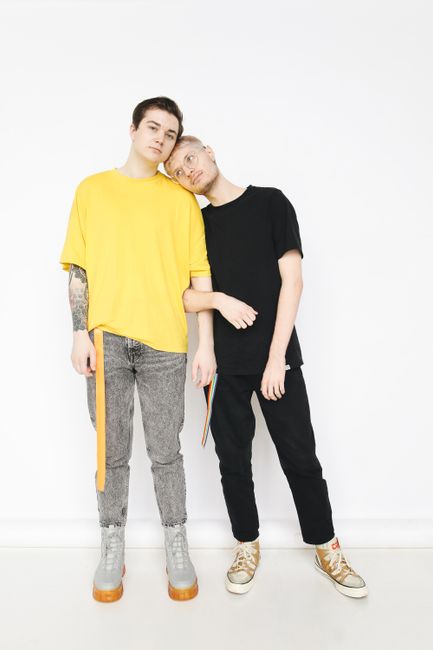
San Diego queer designers honor basketball legends through inclusive pride apparel lines
The late afternoon light slants through the high windows of a converted warehouse on 30th Street in North Park, catching on bolts of organic cotton dyed in deep indigo and sunset orange. Sewing machines click in steady rhythm while a basketball thumps against the concrete floor i
fashion
The late afternoon light slants through the high windows of a converted warehouse on 30th Street in North Park, catching on bolts of organic cotton dyed in deep indigo and sunset orange. Sewing machines click in steady rhythm while a basketball thumps against the concrete floor i
M
Marcus Johnson
Jun 5, 2026 · 5 min read
Share
X / Twitter
Facebook
Instagram
Threads
Reddit
LinkedIn
Copy Link
Email
The late afternoon light slants through the high windows of a converted warehouse on 30th Street in North Park, catching on bolts of organic cotton dyed in deep indigo and sunset orange. Sewing machines click in steady rhythm while a basketball thumps against the concrete floor in the corner, its rubber echo mixing with the sharp scent of screen-print ink. Alex Rivera holds up a hoodie, the fabric still warm from the press, and traces a finger over the small embroidered silhouette of a player driving to the hoop, the outline intersected by a thin pride stripe that only shows under certain light. The stakes here run deeper than seasonal merch drops. Queer fans have long watched basketball from the edges of arenas and living-room couches, their loyalties to legends like Bill Russell or Cheryl Miller tempered by the knowledge that locker rooms and front offices rarely made room for them. When apparel carries both the weight of those histories and the colors of their own identities, it turns private allegiance into something wearable on game days or at family barbecues. That shift matters in a city where pickup courts in Mission Bay and Balboa Park draw mixed crowds every evening, yet team jerseys still arrive from national chains that treat pride collections as afterthoughts. For younger fans especially, seeing a hoodie that nods to a childhood hero without erasing their own presence changes how they claim space in the stands. Rivera’s studio sits above a taqueria that opens at seven each morning. Last month they hosted a small release for a capsule line honoring Magic Johnson’s Showtime era. The crew printed forty limited tees on a Thursday night, each one stamped with a number thirty-two rendered in interlocking rings that form a subtle rainbow when viewed from the side. One customer, a nurse from Logan Heights, bought two and said the design let her wear her team colors to work without the usual questions from coworkers. Rivera, who grew up playing point guard at the old Copley YMCA, recalled how the first sample felt too loud until they muted the palette to match the faded hardwood of older gyms. Production costs ran about eighteen dollars per piece, sold at forty-five, with a portion of each sale routed to a local queer youth sports fund that keeps the lights on at three indoor courts downtown. Yet the same garments that read as celebration to some draw quiet resistance elsewhere. A few online comments from traditional collectors called the work “a distraction from the stats,” while one vintage shop owner in Little Italy refused to carry the line because the fabric weight differed from official replica jerseys. Rivera has fielded emails asking why the designs avoid team logos altogether, a deliberate choice after two major brands pulled similar projects following sponsor pushback. The complication sits in the middle: honoring legends without borrowing their institutional armor means smaller runs, higher per-unit costs, and the constant need to explain the reference to buyers who never saw the original games. Still, the studio keeps a whiteboard covered in half-finished sketches, including one that layers a 1990s Dream Team pose over a trans flag gradient, proof that the pushback has not slowed the drafting table. Anyone looking for the next drop can stop by the pop-up table Rivera sets up every other Saturday inside the North Park Thursday farmers market, just past the coffee stand that opens at eight. The current run includes crewnecks at sixty dollars and trucker hats at twenty-eight, both printed on-site so sizes can be swapped if needed. Follow the studio account for exact dates; they post the schedule the Monday before and often add a second batch when the first sells out by noon. A quick message there also gets you on the list for the next private fitting session held above the warehouse, where Rivera measures directly from the body instead of relying on standard charts. The thread that runs from Russell’s championship rings to a hoodie in a San Diego closet is thinner than most expect, yet it holds when the fabric is cut with care.
One Saturday morning Rivera sets the table up again beside the fountain at Balboa Park, where a rec league from City Heights has already claimed the nearest court. A sixteen-year-old named Marcus lingers after his game, turning a trucker hat in his hands and pointing to the small embroidered number that matches his own jersey. He explains that his uncle, a retired Navy mechanic who still attends every home game at the arena downtown, once told him never to mix politics with sports, yet the hat’s muted palette and hidden stripe let him wear it on the family couch without comment. Marcus buys it with crumpled bills from his allowance and leaves it on the bench during the next quarter, the rainbow edge visible only when the wind lifts the brim. By the following week the same hat shows up in photos posted by players at the indoor gym on El Cajon Boulevard, where a weekly queer pickup night has started using the design as an informal signal for new arrivals. Rivera fields a call from a local tailor who wants to replicate the collar construction for a small batch of custom shorts, the conversation stretching across the workbench while the afternoon light shifts from the high windows onto stacks of fresh cotton blanks. These quiet exchanges accumulate in neighborhoods where basketball courts sit blocks from military housing and pride flags hang in the same windows as faded championship banners, each garment carrying just enough history to feel familiar and just enough color to mark a different kind of belonging.
About the Author
M
Marcus Johnson
Staff writer at ThePinkPulse — covering LGBTQ+ news, culture, and community stories.