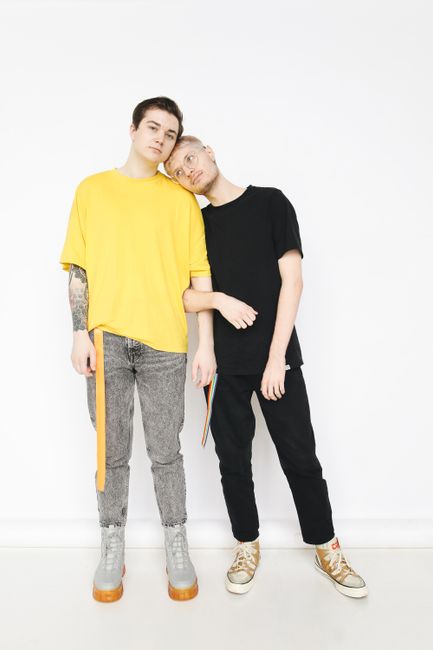
Sao Paulo Street Style Queers Brazil Gender Binary Through Bold Prints
In the late afternoon light along Rua Augusta, the air thick with exhaust and the sharp tang of grilled linguiça from a corner cart, a person paused at the crosswalk. Their shirt featured oversized banana leaves in clashing shades of fuchsia and lime, tucked into high-waisted tro
fashion
In the late afternoon light along Rua Augusta, the air thick with exhaust and the sharp tang of grilled linguiça from a corner cart, a person paused at the crosswalk. Their shirt featured oversized banana leaves in clashing shades of fuchsia and lime, tucked into high-waisted tro
Z
Zoe Ramos
Jun 7, 2026 · 4 min read
Share
X / Twitter
Facebook
Instagram
Threads
Reddit
LinkedIn
Copy Link
Email
In the late afternoon light along Rua Augusta, the air thick with exhaust and the sharp tang of grilled linguiça from a corner cart, a person paused at the crosswalk. Their shirt featured oversized banana leaves in clashing shades of fuchsia and lime, tucked into high-waisted trousers printed with repeating black-and-white optical patterns that echoed both 1970s Brazilian album covers and something more recent. The silhouette mixed broad shoulders with a cinched waist, and the wearer moved without hesitation while traffic lights shifted and horns sounded. A vendor nearby glanced twice before returning to his grill. This kind of dressing carries weight in a country where conservative factions continue to push legislation that limits gender expression in public schools and on television. Street style in São Paulo functions as quiet but visible refusal, one that circulates faster than official channels can track. Young people here inherit both the legacy of military-era censorship and the more recent wave of evangelical influence on policy, yet they inherit Carnival’s license for exaggeration at the same time. Prints become one available tool for testing how much room exists between those forces. The economic angle matters too: many of these garments come from small runs produced in shared studios in the city’s eastern districts, where rents remain lower than in the central fashion hubs, so the barrier to entry stays reachable for students and recent graduates who might otherwise feel priced out of visible self-presentation. Last Thursday evening at the open-air market behind the Pinheiros metro station, tailor and print designer Lúcio Mendes stood beside a rack of button-down shirts priced at R$180 each. A small crowd gathered while he explained the repeat on a new bolt of fabric he had sourced from a supplier in Brás. “I wanted the scale of the motif to feel wrong on purpose,” he said, holding the cloth at arm’s length so the pattern of interlocking arrows appeared to shift direction depending on the viewer’s angle. A regular customer, a film student named Beatriz, bought two shirts on the spot and immediately layered one over the other for an impromptu try-on. Mendes noted that most of his sales now happen through direct messages rather than fixed shop hours, because word spreads quickest among people who already understand the visual code. Yet the same prints that read as deliberate disruption in one setting can flatten into trend copy in another. At a rooftop event hosted by a lifestyle brand in Itaim Bibi the following weekend, several attendees arrived wearing similar tropical motifs purchased from fast-fashion outlets along Rua Oscar Freire. The difference showed in cut and context: the mass-market versions sat straighter on the body and lacked the hand-finished seams that let Mendes’s pieces move with the wearer. One guest admitted she had chosen the shirt mainly because it matched the evening’s sponsored color palette. The moment illustrated how quickly an aesthetic signal can be absorbed and resold without the original friction that made it interesting on the street in the first place. Anyone curious to see the distinction in person can head to the Feira de Artes da Vila Madalena on Saturday mornings, where Mendes keeps a stall between a ceramics stand and a vintage magazine seller; arrive before eleven to avoid the worst of the heat and bring cash since most vendors there still prefer it. Following the Instagram account @estampaserradas gives advance notice of new drops and occasional one-day pop-ups in shared studios near the Tamanduateí river. Beatriz, the film student from the market, occasionally posts short videos documenting how she alters the shirts for different shoots, and those clips offer practical ideas for adapting the garments once they leave the rack. The prints keep circulating because they fit easily into existing wardrobes while still refusing to settle into one expected shape or wearer. In a city that moves as fast as São Paulo, that small refusal registers more clearly than any single manifesto.
A different kind of visibility emerged last month at the open-air cinema screenings held weekly along the Minhocão. Projectionist and occasional model Sofia arranged her clothing rack beside the temporary screen, offering altered versions of the same prints for viewers who wanted to extend the evening into an impromptu runway. One piece featured a modified collar that allowed it to be worn reversed, revealing a hidden layer of solid color underneath. Viewers who purchased these items often returned the following week wearing them again, now part of a larger group that clustered near the concrete pillars. The screenings themselves drew from Brazilian cinema of the 1970s, films that had once faced censorship boards, and the clothing choices echoed those histories without direct reference. Sofia kept a notebook of customer feedback, noting which alterations held up best under the high winds that swept across the elevated park after dark. Those notes later informed adjustments in Mendes's next batch, closing a loop between street observation and small-scale production that bypasses larger industry channels entirely.
About the Author
Z
Zoe Ramos
Staff writer at ThePinkPulse — covering LGBTQ+ news, culture, and community stories.