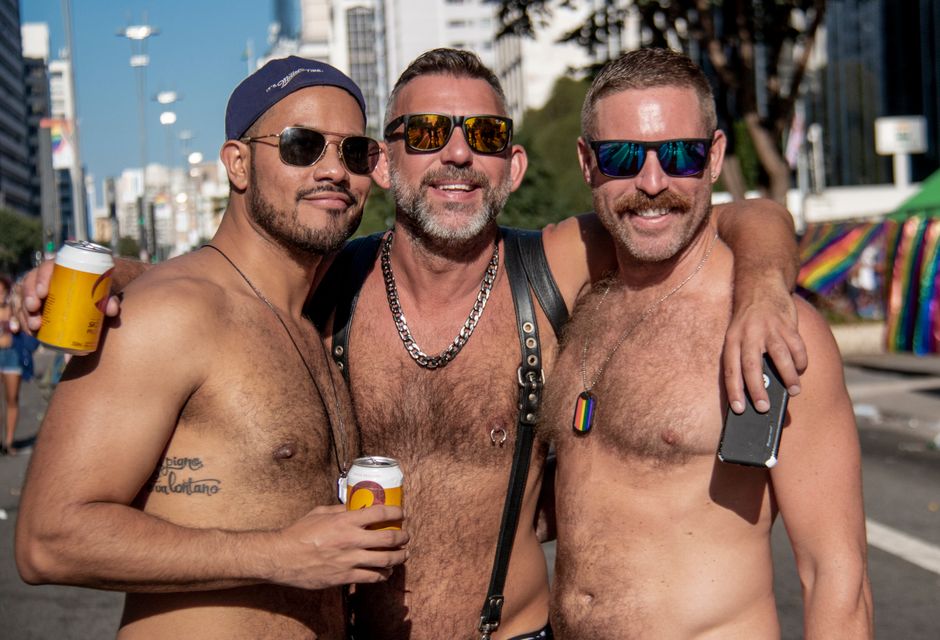
This small Fort Lauderdale enclave isn't just a neighborhood—it's the closest thing South Florida has to a functioning gay municipality. Here's how a place of barely 3,700 residents became the region's most openly queer-run town.
Community
This small Fort Lauderdale enclave isn't just a neighborhood—it's the closest thing South Florida has to a functioning gay municipality. Here's how a place of barely 3,700 residents became the region's most openly queer-run town.
On any given Friday evening, Wilton Drive fills with people who don't have to code-switch or perform straightness. They're not tourists visiting for a weekend. They live here, own businesses here, serve on the town council here, and have built something that most American towns can't claim: a place where LGBTQ people aren't an afterthought to city planning but the actual center of municipal life.
Wilton Manors is not a resort destination. It's not a theme park version of gayness. It's a town of roughly 3,700 people in Broward County where the mayor is gay, where the majority of town commissioners are LGBTQ, and where that fact doesn't make headlines because it's simply how things are.
The town's infrastructure reflects this reality. Wilton Drive, the commercial spine running through the neighborhood, hosts a mix of local spots that serve both the permanent residents and visitors—a Cuban restaurant, a gift shop, a bistro. The Male Art of David W. Haskins sits at 2301 Wilton Drive, showcasing work in a gallery space that wouldn't exist if this town operated on straight timelines and straight aesthetic priorities. These aren't businesses performing inclusivity for corporate approval. They're businesses that exist because the people who run this town decided that their own lives, their own culture, and their own vision of what a place should look like mattered.
That's a radical statement in 2024, even in Florida. While outlets like The Washington Blade cover national battles over education policy and political funding, the real story happening right here on Wilton Drive is quieter and perhaps more durable: a functional alternative to the heteronormative default.
The town incorporated in 1953, but its transformation into an openly LGBTQ municipality happened gradually over decades. In the 1980s and 1990s, as AIDS devastated urban gay communities and conservative politicians weaponized the epidemic, Wilton Manors became a refuge for people who wanted to live openly without constant surveillance or threat. Real estate values were affordable. The town was small enough that political participation actually mattered. People moved here, ran for office, and started winning.
Today, that history lives in how the town operates. The municipal government doesn't require LGBTQ residents to justify their existence or their partnerships. It doesn't debate whether trans people deserve healthcare. It doesn't stage culture wars over Pride flags or drag performances. The energy goes elsewhere—toward actual governance, toward maintaining infrastructure, toward making sure a small town functions.
This doesn't mean Wilton Manors is perfect or that it exists in some post-discrimination utopia. Like any small town, it has class dynamics, generational tensions, and the typical friction of people living in close quarters. Real estate prices have climbed. Longtime residents have been priced out. The town struggles with the same issues as its wealthier neighbors: traffic, development pressure, the slow erosion of character as chains and chain-adjacent businesses expand.
But the political skeleton of the place remains intact. When state-level attacks on LGBTQ rights intensify—and they do, regularly—Wilton Manors doesn't have to debate whether to defend its residents. The defense is already built into the structure.
That structure shows up in small ways. A realtor on NE 26th Street operates in a town where LGBTQ clients and colleagues don't have to worry about discrimination in housing markets. A medical practice on the same stretch can serve a population without fear that state legislation will criminalize the care they provide. A small restaurant can exist as itself without performing respectability for a hostile town council.
The Washington Blade and national outlets will cover the next round of anti-LGBTQ legislation that comes out of Florida. They'll report the numbers, the politics, the legal strategies. But they won't capture what it means to live in a place where the local government is already yours, where the people making decisions about zoning and budgets and public safety are people who understand what it means to navigate the world as queer. That's too local, too granular, too specific to this particular corner of Broward County.
Wilton Manors exists in a state that has become increasingly hostile to the people who built it. Gov. Ron DeSantis's administration has made culture war against LGBTQ people a centerpiece of governance. The state legislature passes one restrictive bill after another. But in this town, the local apparatus of power is in the hands of people who won't enforce those restrictions with enthusiasm. People will still be able to get healthcare. Drag performances will still happen. Pride will still be celebrated with municipal support.
That matters more than it sounds. When you live in a state that treats you as a problem to be solved, having a town that treats you as a constituent to be served changes what's possible. It changes whether you stay or leave. It changes whether you can build a life or whether you're constantly preparing to flee.
Wilton Manors isn't a solution to broader political problems. It's not a model that scales to state or national level—at least not yet. But it is proof of concept. It shows what happens when LGBTQ people have actual political power in an actual place. No performative allyship. No diversity committees that recommend things that never happen. No town council meetings where gay rights are debated as though they're negotiable.
Just a small town where people show up on Friday nights, grab dinner, walk down the main street, and don't have to wonder whether they belong there. In 2024 Florida, that's not a small thing.