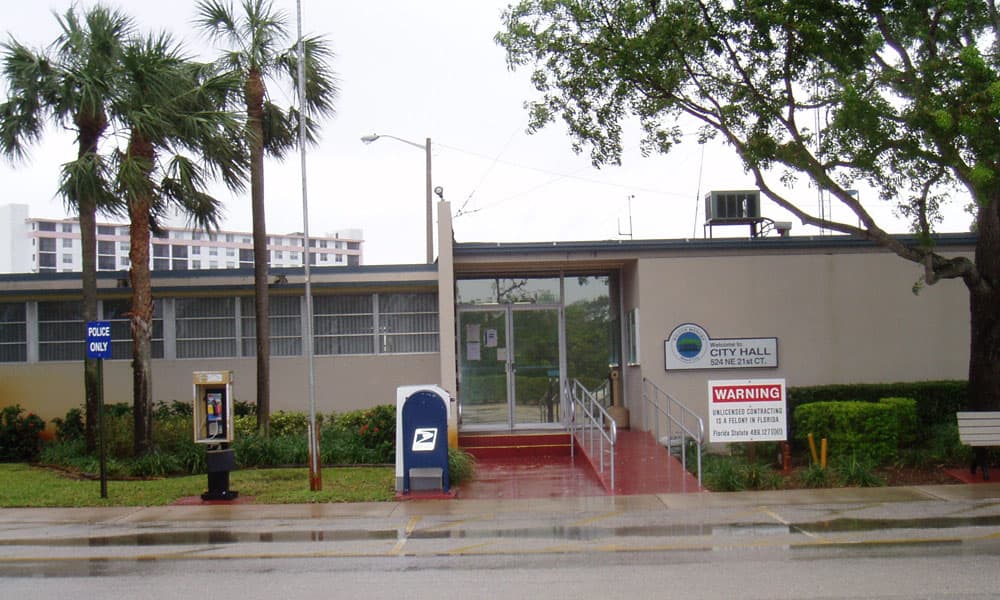
This small Fort Lauderdale enclave has resisted the urge to become a theme park version of itself. Instead, it remains a functioning neighborhood where queer people live, work, and build actual lives—not just weekend getaways.
Travel
This small Fort Lauderdale enclave has resisted the urge to become a theme park version of itself. Instead, it remains a functioning neighborhood where queer people live, work, and build actual lives—not just weekend getaways.
Wilton Drive on a Tuesday afternoon looks like what happens when you stop performing gayness for tourists and just... live. A man in a tank top carries groceries into an apartment above a salon. Two women in business casual walk toward an office building. A dog walker manages four leashes with the calm efficiency of someone who's done this route a hundred times. No one is performing. No one is selling anything. This is Wilton Manors—a two-square-mile municipality that has somehow avoided becoming a caricature of itself, even as the rest of South Florida's gay infrastructure crumbles under the weight of commercialization and political hostility.
Wilton Manors sits just north of Fort Lauderdale's beachfront drag, close enough to matter but far enough to maintain its own rhythm. It's the kind of place where the gay population isn't a marketing demographic—it's the actual population. According to census data, roughly 30 percent of Wilton Manors residents identify as LGBTQ. That's not a statistic meant to attract visitors. That's just what happens when a neighborhood becomes affordable and safe enough for people to actually stay.
The neighborhood's spine is Wilton Drive itself, a two-mile stretch that functions less like a gay mecca and more like an actual main street. There's a hardware store. There's a tax accountant's office. There's a dentist. Interspersed among these are businesses that cater to the neighborhood's actual residents rather than tourists seeking a weekend of excess. Ray of Life Healing LLC operates on Wilton Drive, offering services to people managing real bodies with real needs. It's the kind of business that exists because residents are here year-round, managing their health, their stress, their lives.
For anyone concerned about appearance—and let's be honest, this is still a gay neighborhood—Chi Spa sits on North Dixie Highway, a few minutes' drive from the Drive itself. It's a grooming business for people who actually live here, not a Instagram-ready destination spa. Similarly, Niki's Spa Services operates on NE 26th Street, another block that has quietly become a hub for the neighborhood's practical needs. These aren't luxury experiences designed to be photographed and shared. They're services for people managing their appearance as part of their actual lives.
Wilton Manors has also become a place where queer people can access professional services without the performance. Gayle Nelson LCSW Integrative Psychotherapy operates at 1650 NE 26th Street, offering therapy to residents who need it—not as a trendy wellness experience, but as actual mental health care. The fact that a licensed therapist specializing in integrative work has a practice here reflects something important: Wilton Manors is a place where queer people have decided to stay, build careers, and manage their actual psychological lives. That requires infrastructure that serves residents, not spectators.
The mortgage business matters too. Donn Rubin operates as a loan officer at Fairway Independent Mortgage Corporation on NE 26th Street, which means queer people in Wilton Manors are buying homes here. They're not renting temporary apartments for a season of partying. They're getting mortgages. They're building equity. They're making the kind of long-term commitment to place that transforms a neighborhood from a destination into an actual community.
Wilton Manors' resistance to becoming a full-time party destination becomes more significant when you consider what's happening in the rest of Florida. The state government has made it abundantly clear that LGBTQ people are not welcome, not celebrated, and certainly not worth funding. Key West Pride lost state funding. Drag performers face legal threats. Teachers fear their jobs. In this context, Wilton Manors functions as something almost radical: a place where gay life is just life. It's not under siege in the local government. It's not a performance. It's not a product.
There's an insider tip worth knowing: the neighborhood's character isn't defined by nightlife, though bars exist here. It's defined by the fact that you'll see the same people at the same places because they live here. You'll see couples who've been together for decades. You'll see people aging in place. You'll see intergenerational friendships. The social infrastructure of Wilton Manors works because it's built on permanence, not tourism.
WRAP WIZARD LLC on North Dixie Highway represents another layer of this: a retail business that serves people with actual, ongoing needs rather than impulse purchases from visitors. It's the kind of shop that succeeds because residents come back repeatedly, not because it's designed as a destination.
What makes Wilton Manors worth visiting—or worth considering as a place to live—is precisely what makes it uninteresting to the people who've turned other gay neighborhoods into theme parks. There's no carefully curated aesthetic. There's no influencer culture. There's no sense that you're consuming gayness as a product. Instead, there's the quiet, unglamorous reality of queer people managing mortgages, attending therapy, getting their hair cut, and walking their dogs on an ordinary Tuesday afternoon. In an era when LGBTQ life is constantly under political attack and commercialized beyond recognition, that ordinariness feels like the most radical thing possible.